Asphalt Paving in Newport News, VA
AW Asphalt & Sealcoating LLC handles asphalt paving in Newport News, VA, from a single driveway to a full parking lot or private road. If you're working with bare ground or asphalt that's past saving, new pavement gives you a smooth, solid place to drive and park. We lay new asphalt, resurface worn pavement, and replace surfaces that have failed at the base.
How Long Does Asphalt Paving Take?
A typical driveway is paved in one to two days, and most parking lots take two to five days depending on size and base work. The paving itself moves quickly once the base is ready. Most of the time goes into grading and compacting the stone underneath, plus removing old material if there is any.
After paving, you can usually drive a car on new asphalt in two to three days. Full curing takes six to twelve months, which is why the surface stays a little soft in hot weather that first summer.
What's Included in an Asphalt Paving Job
Every paving project follows the same basic order, though the details change with the site.
Site Prep and Base
The ground gets graded so water runs off instead of pooling. Then a layer of crushed stone goes down, usually 4 to 8 inches deep, and gets compacted until it's firm. A weak base is the most common reason new asphalt cracks early, so this step can't be rushed.
New Asphalt Installation
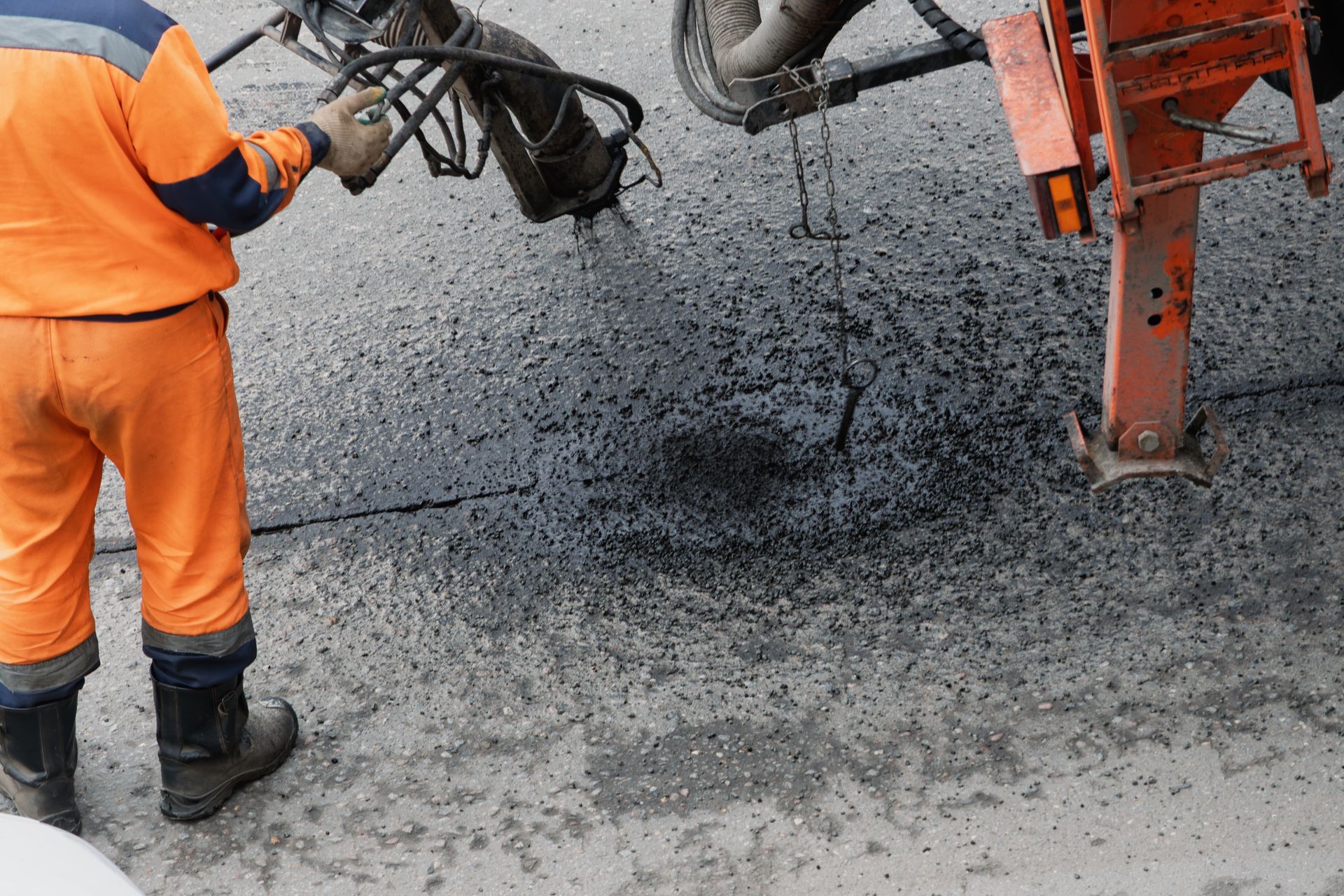
Hot asphalt arrives at around 275 to 300 degrees, and a paver spreads it across the base while it's still workable. A roller compacts it to the finished thickness, typically 2 to 3 inches on a driveway. Shaping the edges helps the surface shed water toward the sides.
Asphalt Resurfacing and Overlays
If your existing pavement has a sound base and only surface wear, resurfacing may be enough. An asphalt overlay adds a new layer, usually 1.5 to 2 inches, on top of the old one after cracks are filled. It costs less than starting over and goes down faster.
Full Replacement
When asphalt is badly cracked in a web pattern or has sunk in spots, the base has usually failed. In that case the old pavement and base come out completely, and the job starts fresh from the ground. Resurfacing over a failed base just puts fresh asphalt on a problem that will come back through.
Paving From a Company That Also Maintains It
Choosing an asphalt paving company is partly about what happens after the job. New pavement still needs care down the road. We also handle asphalt sealcoating and asphalt repair, so the same people who laid your surface can keep it in shape for years after.
You can call (757) 561-8362 to talk through the site and what you want it to look like when it's done.
Asphalt Paving Around Newport News
Paving here has to account for heavy rain and flat ground, so slope and drainage get extra attention on every job. Along with Newport News, property owners in Hampton, Poquoson, and Suffolk can call to talk about a paving project. We also take paving work in Richmond, Virginia Beach, and on the Eastern Shore, VA.
Asphalt Paving FAQs
How thick should an asphalt driveway be?
Most driveways are paved 2 to 3 inches thick after compaction, over a stone base of 4 to 8 inches. Parking lots that carry delivery trucks or heavier traffic often need 3 inches or more.
Can new asphalt go over my old driveway?
Yes, if the old surface has a solid base and the cracks are limited. An overlay adds about 1.5 to 2 inches of new asphalt. If you see web-like cracking or sunken areas, the base is likely failing and the old pavement should come out first.
What time of year is best for paving?
Asphalt needs air and ground temperatures above about 50 degrees to bond and compact properly. In Newport News, that usually means spring through fall. Cold ground cools the mix too fast, and the surface ends up rough and weaker than it should be.
How should I treat new asphalt for the first month?
Keep heavy trucks off it for at least 30 days, and avoid turning your wheels while the car is stopped. On hot days, fresh asphalt is soft enough that kickstands and trailer jacks can leave dents. Park in different spots so tires don't press grooves into one place.
When should new asphalt get its first sealcoat?
Wait six to twelve months so the asphalt can finish curing. Sealing too early traps oils that need to escape, which can leave the surface soft.
Plan Your Paving Project
Paving goes smoother when the scope is clear from the start. Send us the size of the area and a few photos, or call and describe it, and we'll go from there. You can also see everything else AW Asphalt & Sealcoating handles before you call.